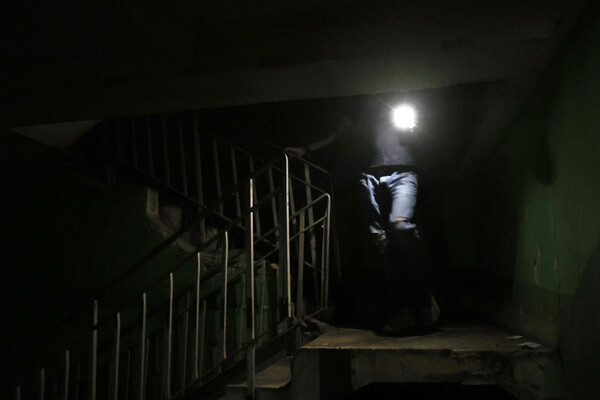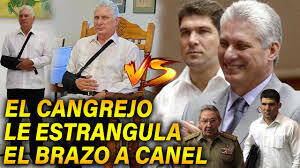
While one source mentions a rift between Díaz-Canel and the Castro family, last week this contradiction was exposed with stark brutality. This stance was complemented by the hardline approach of Marco Rubio, who deemed the reforms announced by Havana insufficient and made it clear that for Washington, the issue is not just about opening businesses, but about altering the power structure. Thus, the Cuban tension enters an especially delicate phase. Díaz-Canel attempts to portray himself as the head of an entrenched resistance, while at the same time, the Castro faction seeks to conduct business, implement flexibilities, and open channels for dialogue to avoid collapse. On one hand, the Cuban government confirmed contacts with Washington and announced a long-unthinkable opening: Cubans residing abroad will be allowed to invest and do business on the island, a measure designed to attract fresh capital amid a productive collapse and the failure of the electrical system. In other words, while the president promises to endure, the Castro family appears to be negotiating how to continue ruling without Díaz-Canel. This perception aligns with the idea that the Cuban president manages the surface of power, while the decisive architecture remains in the hands of those who truly manage the succession and the system's finances. On this board, figures stand out such as Oscar Pérez-Oliva Fraga, Minister of Foreign Trade and Foreign Investment and Vice Prime Minister, who was the visible face of the announcement about new investments, as well as Raúl Guillermo Rodríguez Castro, known as 'El Cangrejo' (The Crab), Raúl Castro's grandson and a long-considered piece of growing influence within the Cuban power structure. Conversations with the United States are read by observers as a process where names linked directly to the lineage of Raúl Castro and the universe of GAESA, the military-business conglomerate that controls the most profitable sectors of the Cuban economy, carry weight. What is suggestive is that these negotiations do not seem to be led by the head of state, but by the apparatus that historically administered the real power on the island. Havana, March 18, 2026 - Total News Agency - TNA - Amidst the energy suffocation, massive blackouts, and increasingly open pressure from the United States, the real power in Cuba is once again displaying an old logic: while Miguel Díaz-Canel toughens his discourse and promises an 'impregnable resistance' against the threats from Donald Trump, conversations to open investment spaces and explore an economic exit are likely orbiting around the Castro family and its political, military, and business network. On the other hand, Díaz-Canel himself responded to Trump's threats with a bellicose tone, assuring that any external aggressor 'will clash with an impregnable resistance'. This combination of signals reveals that the regime seeks to gain economic oxygen without ceding political control. The crisis driving this maneuver is profound. Reuters reported that the island had only just managed to restore its electrical grid after a 29-hour nationwide blackout, the worst in recent times, aggravated by fuel scarcity, obsolete infrastructure, and the interruption of oil shipments. The Associated Press also described a scenario of severe deterioration, with extended power cuts, spoiled food, strained services, and social unrest that can no longer be hidden. This scene exposes a dual dynamic in Havana: a resistance rhetoric towards the outside and a pragmatic negotiation towards the inside. In this context, the opening for diaspora investment does not appear as an ideological gesture but as a desperate need for survival. However, behind the negotiation, according to various analyses and international dispatches, is not the formal figure of Díaz-Canel, but the hard core of Castroism. The very centrality of these names reinforces the impression that the economic opening being sold as a regime modernization is, in truth, a family administration of the transition, where what is being negotiated is not a real democratization but a form of continuity adapted to the emergency. On the American side, pressure also escalated. Trump went so far as to say he would have the 'honor' of 'taking Cuba in some way' and suggested he could 'do whatever he wanted' regarding the island, while from his circle there was insistence on the need for a change in leadership.