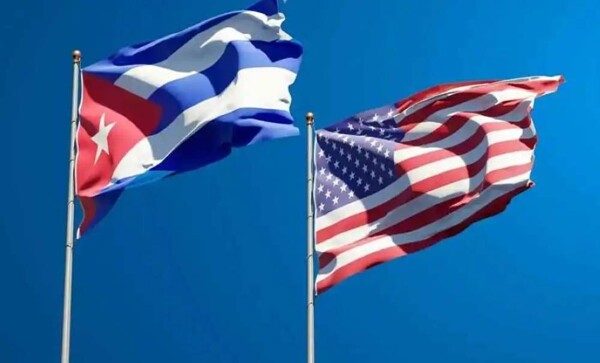
The regime of Miguel Díaz-Canel announced the release of 51 prisoners in the coming days and, almost simultaneously, publicly recognized for the first time that it is holding talks with the United States. This double move exposes just how delicate the phase of the Cuban crisis has become and forced the government to combine gestures of relaxation with political control messages. The fact that the regime decided to publicly recognize these contacts marks a significant change, as it had previously avoided validating this type of high-level management. The backdrop is a Cuba hit by one of the worst crises in its recent history. In this context, the Trump administration has been increasing pressure on Havana, particularly after cutting key energy supplies and publicly insisting that the Cuban government needs to reach some kind of agreement with the United States. Rather, it reflects that the Cuban regime feels the weight of the crisis, needs oxygen, and is beginning to make gestures that it would have avoided recognizing publicly just weeks ago. It is not the first time that the Cuban regime has resorted to partial releases of detainees amid negotiations or attempts at détente with the North American power. The release was presented by the government as a sign of 'goodwill' towards the Vatican, while the head of state himself admitted that there have been recent contacts with the Donald Trump administration to try to find dialogued solutions to bilateral problems. The official decision was communicated on Thursday night. Although the Cuban ruler insisted that it is a 'sovereign decision' and denied that anyone had imposed it on him, the chain of events suggests otherwise: castrism is once again using the issue of prisoners as a bargaining chip in a context of increasing external pressure, energy collapse, and internal economic deterioration. During his televised address, Díaz-Canel confirmed that Cuban officials have held recent talks with representatives of the US government and explained that these exchanges seek to identify bilateral problems, assess the willingness of both parties to take concrete measures, and generate spaces for understanding that allow moving away from confrontation. He also emphasized that the process is sensitive, discreet, and is just beginning its initial phases. In Cuba, partial releases are usually presented as revolutionary humanitarianism, but they often end up functioning as tactical valves to decompress international pressure without changing the underlying repressive logic. The concrete fact is that Díaz-Canel chose to show two moves at once: on the one hand, the release of 51 prisoners in a country denounced for the persistence of political prisoners; on the other, the admission of talks with the United States to seek a less confrontational way out. The difference is that this time the economic pressure on the island looks much more suffocating, and the government's margin of maneuver seems significantly reduced. Despite everything, the announcement left more questions than certainties. That is why, although the news has a strong political weight, it also forces us to look at it with caution. That omission is not minor: the regime is trying to capitalize on the gesture without fully exposing the true political scope of the measure. In fact, the political reading is difficult to avoid. Díaz-Canel releases 51 prisoners at the same time that he whitewashes that there are talks with Washington, a coincidence too precise to be read as a simple administrative act. However, the government did not publish the list of names nor clarified how many of them are political prisoners, a central piece of data in a country where human rights organizations have denounced for years the existence of hundreds of opponents, activists, artists, and protesters in prison, especially after the July 11, 2021 protests. According to the version disseminated by Havana, the 51 detainees had already served a significant part of their sentences and had maintained good conduct in prison. It is still not known who will be on the list of the released, if among them there will be emblematic opponents or, as has happened on other occasions, the gesture will be limited and then accompanied by new arrests or restrictions. Díaz-Canel's recognition of contacts, therefore, appears as an admission of need rather than a sign of strength. The participation of the Vatican is again another decisive factor. Both the release announced now and previous movements show that the mediation of the Holy See continues to be a valid channel when relations between Havana and Washington enter zones of maximum sensitivity. The island drags prolonged blackouts, severe fuel shortages, a drop in economic activity, and growing difficulties in the health system and transportation. That combination does not seem to be a coincidence.