Since mid-2024, the island has suffered prolonged daily blackouts, which have intensified in recent months due to frequent breakdowns of its thermoelectric plants and a lack of foreign currency to import enough fuel.
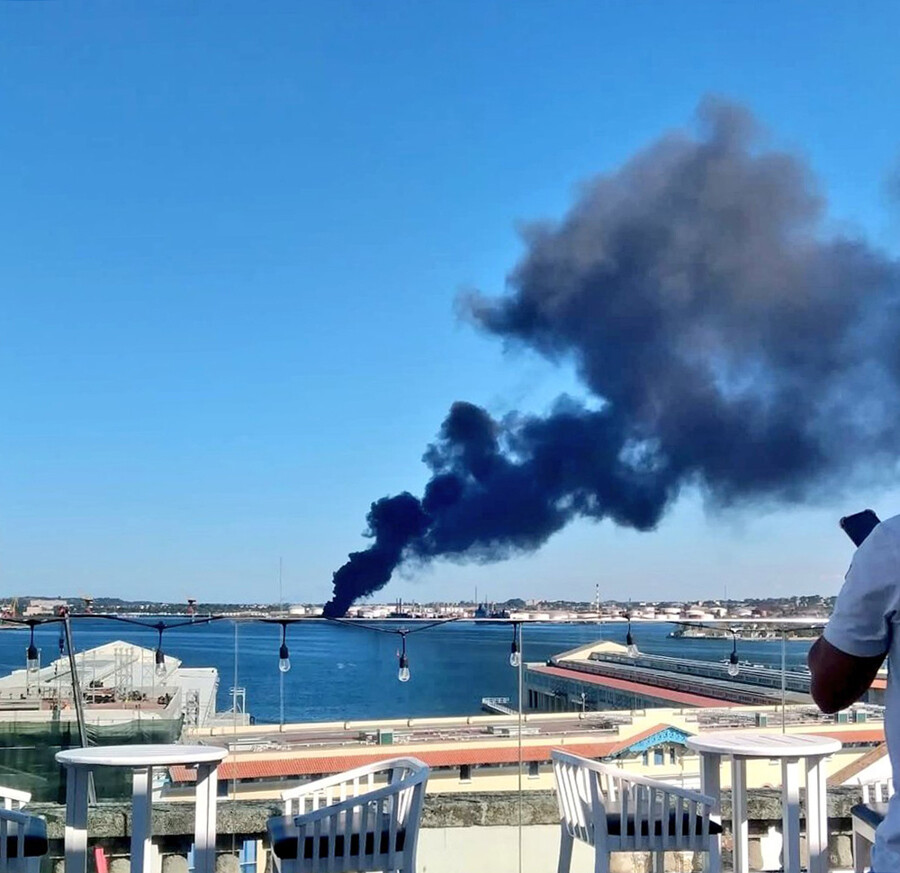
A large-scale fire, accompanied by a thick column of black smoke, broke out this Friday at the facilities of the Ñico López refinery in Havana, according to official media and eyewitnesses. Cuban authorities have not yet reported on the causes and extent of the blaze, which originated in the afternoon and was clearly visible from the entire coast of the Cuban capital's bay.
The Ministry of Energy and Mines assured at around 4:20 p.m. local time (8:20 p.m. GMT) on social networks that the fire had occurred in a warehouse of the infrastructure and was already under control. A warning has also been issued about its proximity to densely populated areas, with the risks involved, and the impact of its spills on the bay's ecosystem.
The fire comes amid Cuba's energy crisis. In August 2022, the country's main strategic fuel reserve infrastructure, the supertanker base in the province of Matanzas (western Cuba), went up in flames after a lightning strike. The island took a week to control the fire, which became the largest industrial disaster in the country's recent history and claimed 17 lives. There was no mention of possible injuries or fatalities.
The Ñico López is one of Cuba's three refineries. The fire completely damaged the structure of up to four tanks—out of a total of eight—with a capacity of 50,000 cubic meters each. It is an old energy facility nationalized in 1960 and has the capacity to process both the country's heavy crude and imported oil. However, this infrastructure has been plagued by technical problems for years.