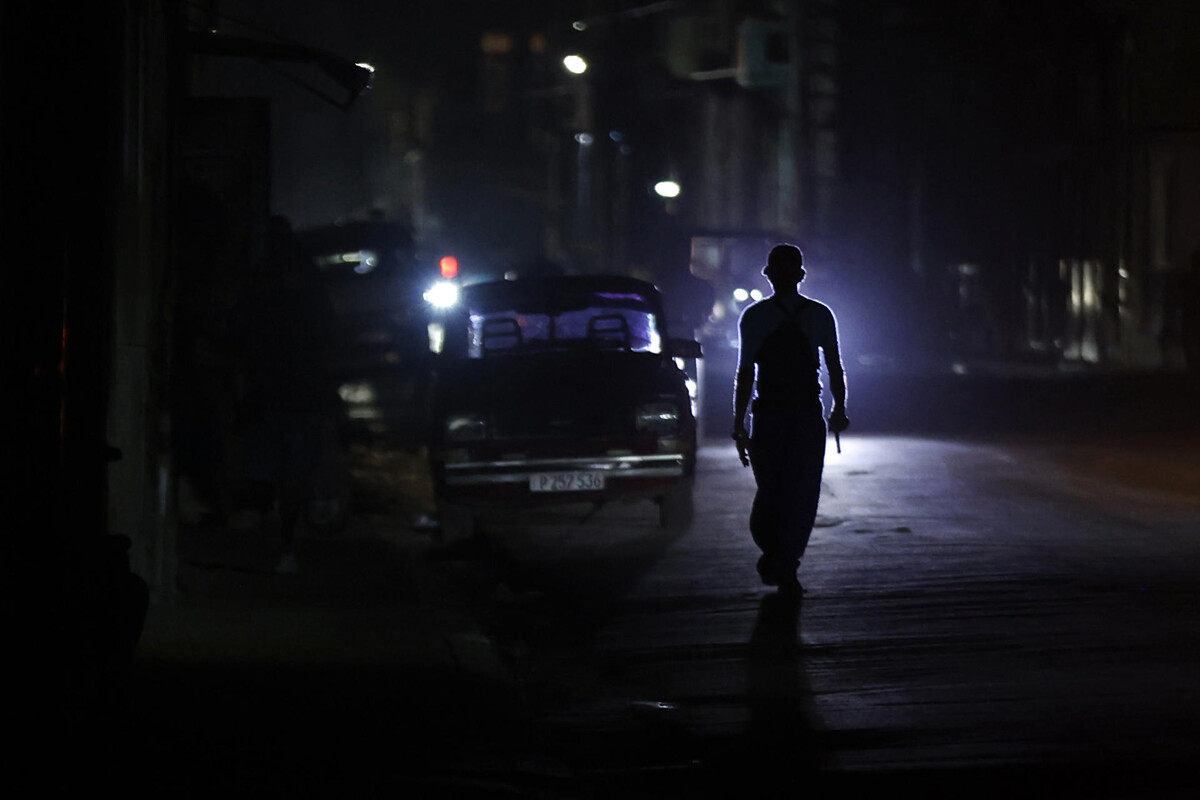
The most recent blackout occurred at 20:54 local time, and authorities are investigating its causes.
Blackouts of more than 20 hours and a historical record without electricity
Since mid-2024, the island has faced daily blackouts exceeding 20 hours in various locations. On January 31, the largest outage was recorded since energy statistics began: 63% of the country was simultaneously without electricity.
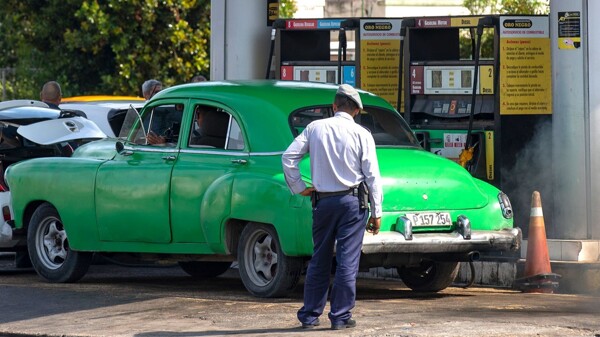
Currently, seven of the 16 operational thermoelectric plants are out of service due to breakdowns or maintenance, including two of the three largest generators, responsible for nearly 40% of the energy mix. Additionally, indirect data points to over 1,000 MW in distributed generation motors being inactive due to a lack of diesel, fuel oil, and lubricants, following the reduction of Venezuelan petroleum supplies.
Underfunding and sanctions worsen the crisis
Independent experts attribute Cuba's electrical crisis to chronic underfunding of the state sector since 1959. Estimates indicate that between $8,000 and $10,000 million are needed to recover the system. The Cuban government, however, blames U.S. sanctions for the energy deterioration.
Prolonged blackouts have already heavily impacted the economy, which has contracted by more than 15% since 2020, and have been a trigger for social protests in recent years.
Electrical collapse affects millions in eastern Cuba
Havana, Feb 4 (EFE). — Cuba's National Electric System (SEN) suffered a new partial collapse on Wednesday, leaving about 3.4 million people without electricity in the eastern provinces of Holguín, Granma, Santiago de Cuba, and Guantánamo, as confirmed by the state-owned Unión Eléctrica (UNE).
The failure originated from a trip on a 220-kilovolt high-voltage line in Holguín, causing the shutdown of the Felton thermoelectric plant, the largest generator in eastern Cuba, as well as another plant and a motor station. A "trip" is an automatic disconnection that activates when a generator detects anomalous values in the electrical flow.
Second fall in four months amid an energy crisis
This is the second partial collapse of the SEN in just over four months, in a context of a severe energy crisis in Cuba, aggravated by fuel shortages and U.S. sanctions that, according to the Cuban government, cause an "energy asphyxiation." In the last year, the electrical system has suffered five total collapses, some with restorations that took days.