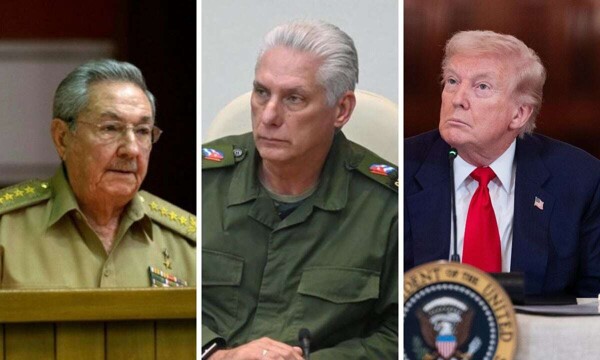
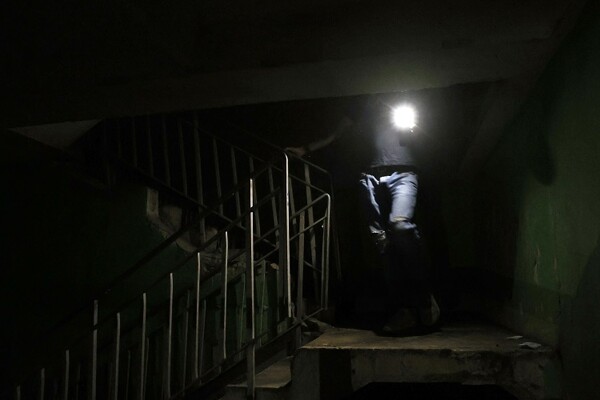
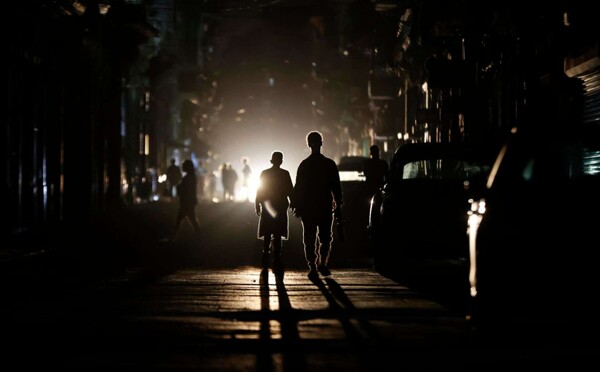
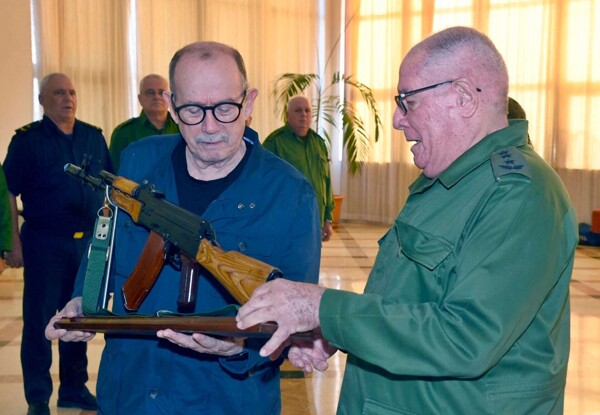
Cuban experts maintain that even if someone with the Castro lineage assumes the presidency, it is unlikely that anything will change. They state that party leadership means nothing in Cuba. Last week, Deputy Minister of Foreign Affairs Carlos Fernández de Cossio refuted comments about a possible change in the political system or Díaz-Canel's departure as part of ongoing talks with the United States. He emphasized that Cuba's political system and the positions of its leaders are not up for negotiation with the United States or any other country. Cuban expert Sebastián Arcos said he cannot imagine Raúl Castro relinquishing power but believes Díaz-Canel could be replaced, referring to him as a 'grey bureaucrat' within the party when he was appointed president. Arcos noted that Castro's death 'would be the kind of shake-up that would crack the regime.' 'No one really knows who is coming to replace him,' said Arcos. Two Castro cousins have come into focus as possible replacements, experts pointed out. One of them, Oscar Pérez-Oliva Fraga, is described as a technocrat. He studied electrical engineering before becoming the general director of an import company and then a business director within Cuba's Special Development Zone of Mariel. The other, Raúl Guillermo Rodríguez Castro, has never held a government post. He served as his grandfather's bodyguard and later headed Cuba's equivalent of the U.S. Secret Service with the mission of spying on the country's leaders. He made news last month when he met secretly with U.S. Secretary of State Marco Rubio. While U.S. President Donald Trump pushes for a change in Cuba's leadership, speculation is growing about who could replace Cuban President Miguel Díaz-Canel and who it might be. Díaz-Canel, Raúl Castro's chosen successor in 2018 and largely a figurehead, is the only ruler without the Castro surname since the 1959 revolution. He has two years left in his term, but some experts and a growing number of Cubans doubt he will complete it. Experts point out that the real power in Cuba lies with the military, under Raúl Castro. The 94-year-old general remains in command, appears at key events, and is considered the most powerful person in the country, which has been under an absolutist government for over six decades, first by revolutionary leader Fidel Castro and then for the last decade by his younger brother Raúl. Arcos noted the regime's absolute reluctance over the last 30 years to implement serious structural economic reforms. 'For the first time in Cuba, there is a possibility that several people will fight for power,' he said. Cuban expert Carlos M. Rodríguez Arechavaleta stated that the social situation in Cuba has become unsustainable.

Speculations Grow Over Leadership Change in Cuba
Experts discuss the possible replacement of President Miguel Díaz-Canel, pointing to his unpopularity and deepening economic crisis. Two of his relatives have come into focus as potential contenders for the post.