The issue of succession dominates the Cuban political debate, not because Havana has recognized it as an open path, but because several factors came together in a few days, fueling speculation. Among them are various reports of conversations with the United States, public pressure from President Donald Trump, the wear and tear on Miguel Díaz-Canel amid the energy crisis, and the increasingly visible appearance of figures from Castro's inner circle.
The discussion gained momentum after The New York Times reported that Washington would have proposed Díaz-Canel's departure as a condition for significant progress in negotiations. However, the Cuban government publicly rejected the version. Vice Foreign Minister Carlos Fernández de Cossio said that neither Cuba's political system nor the office of the president are subject to negotiation with the United States.
Why is succession being discussed?
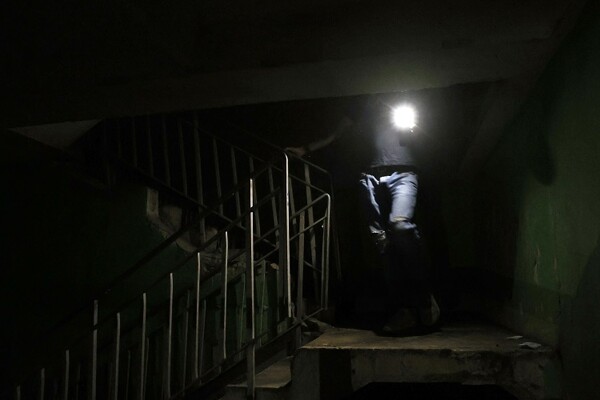
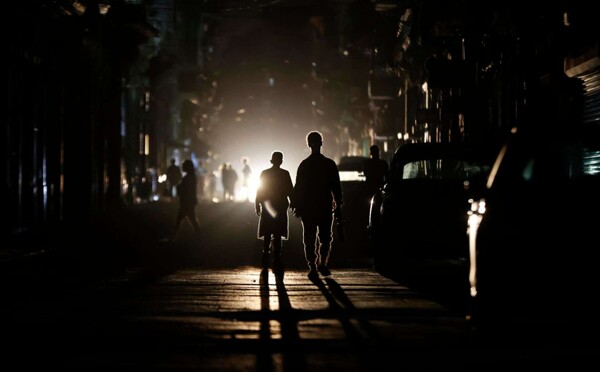
This scenario is gaining strength for three reasons that are on the table. The first is the internal crisis, as Cuba had gone three months without receiving oil shipments amid blackouts and an increasingly serious energy situation. In this context, the deterioration of the economic and electrical situation is feeding more and more doubts about whether the president will complete his term.
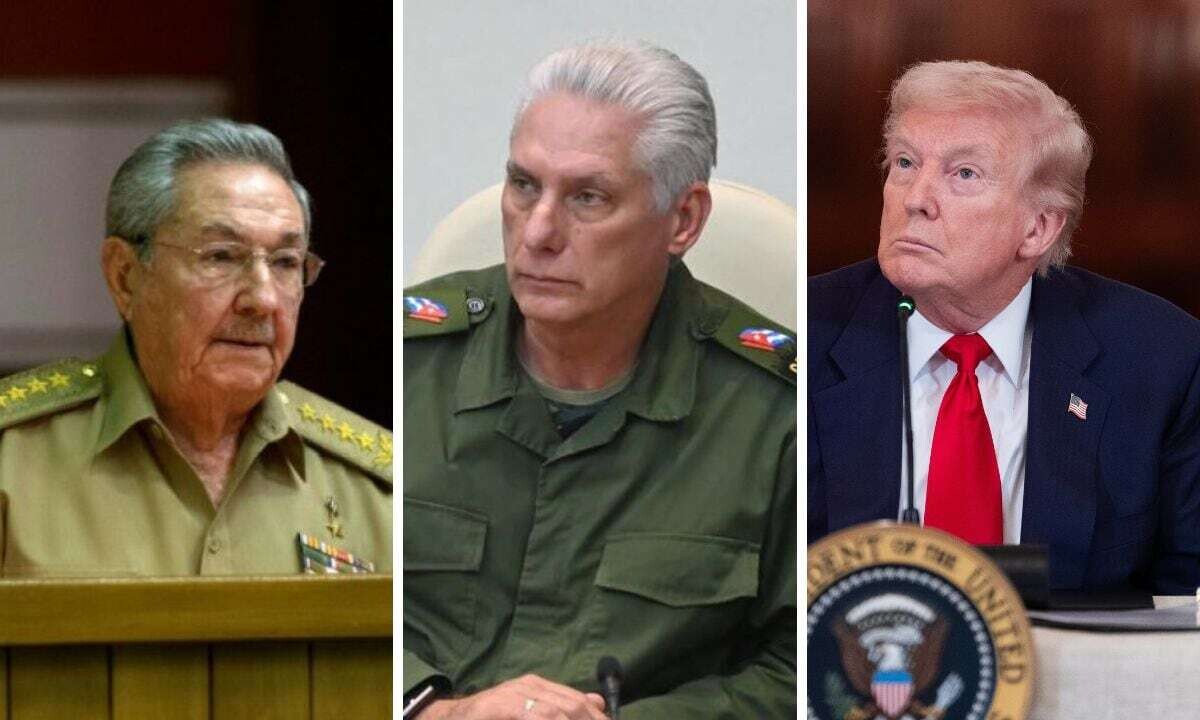
The second is that Díaz-Canel himself admitted that there are conversations with the United States and said they are conducted with the participation of Raúl Castro and the leadership of the party, the state, and the government, which made the topic move from rumor to a real possibility.
The third is the political wear and tear on the president, as he shows little real power in the face of the military leadership and Raúl Castro's circle. In fact, the chain of protests, blackouts, and economic crisis during his term has made him the most visible face of the system's deterioration.
How would the process work?
If there were a change before 2028, the formal process would not go through an open popular election, but rather through the National Assembly of People's Power, according to Cuba's 2019 Constitution. The text states that the President and Vice President of the Republic are elected by the Assembly from among its deputies, and that in case of the president's absence, illness, or death, the vice president temporarily replaces him until the Assembly itself elects a new president.
This means that if the change were to occur, the most likely institutional route would be a controlled transition from within the system, not a competitive electoral transition like the one much of the Cuban exile might imagine.
Who is participating in the Cuban succession?
Miguel Díaz-Canel
He remains the formal President of Cuba and First Secretary of the Communist Party, but his figure appears increasingly battered. He still has two years left in his term, although experts and sectors of the population doubt he will complete it.
Raúl Castro
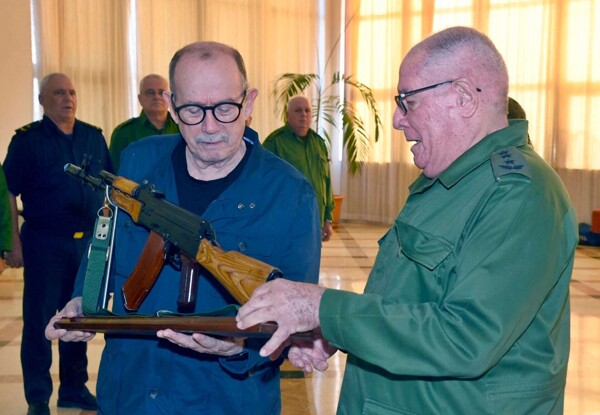
Although he has left the most visible positions, he remains a central figure in power. Díaz-Canel said that conversations with Washington are led by "Army General Raúl Castro Ruz," and according to analysts consulted by AP and RTVE, no fundamental decision is made without his approval.
Raúl Guillermo Rodríguez Castro
Known as "Raulito" or "El Cangrejo," he is Raúl Castro's grandson and therefore a figure close to power on the island. AP reports highlight his recent presence at official events and that experts identified him as a trusted link between Raúl Castro and U.S. interlocutors. However, the same sources see it as difficult for him to be the public face of a transition because his surname symbolizes too much continuity.
Óscar Pérez-Oliva Fraga
This is the name that has gained the most traction. He is the Vice Prime Minister, the great-great-nephew of Fidel and Raúl Castro, and a figure with a more technocratic profile. His incorporation into the National Assembly put him in a constitutional position to be elected president, and in fact, several analysts consider him the face that could sell a renewal without breaking the system's control.
Real change or a controlled transition?
That is the big question. The Cuban government insists that Díaz-Canel's office is not up for negotiation with the United States, but the fact that his future is being discussed publicly, amid a severe energy crisis and bilateral talks admitted by Havana, makes the topic no longer seem like a mere theory.
Furthermore, several experts cited by AP and RTVE agree that removing Díaz-Canel would not necessarily mean dismantling the core of Cuban power, but could rather be a way to move a piece to preserve the board.
Thus, the succession in Cuba is gaining strength not because it is confirmed, but because for the first time in a long time, crisis, external pressure—mainly promoted by President Donald Trump—internal wear and tear, and visible names for change have coincided.
The great unknown is whether this will lead to a transition with deep changes or a surgical operation to sacrifice the president without touching the heart of the system. For now, Díaz-Canel remains in office, Cuba denies that his position is under negotiation, and the Constitution provides an institutional path to replace him if the system decides to move him. The rest, at least for now, is speculation.