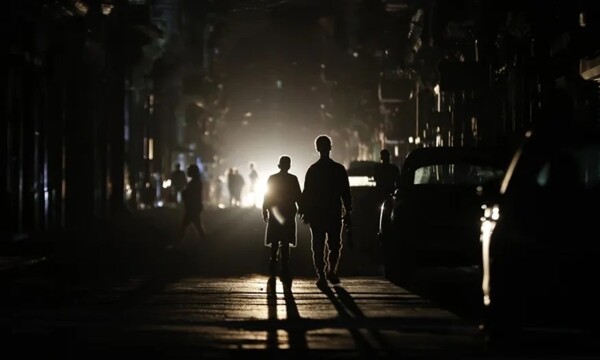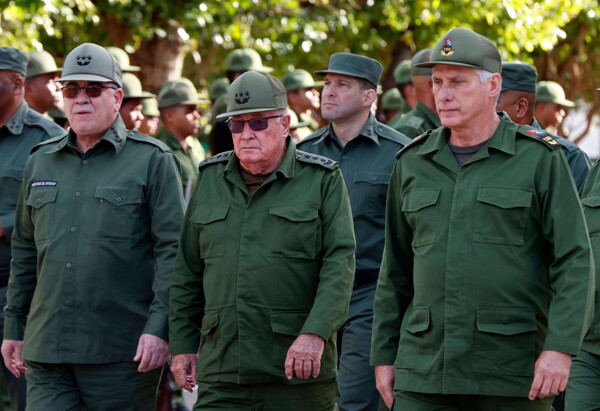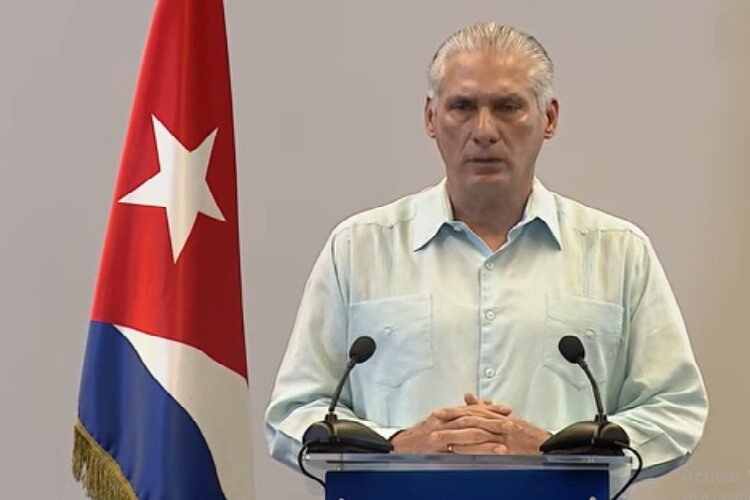
Cuba opens the door to a serious bilateral dialogue with the United States. Cuban President Miguel Díaz-Canel reaffirmed this Monday his willingness to “engage in a serious and responsible bilateral dialogue” during the visit of U.S. Democratic Congressmembers Pramila Jayapal and Jonathan Luther Jackson to the island. “I reiterated the willingness of our government to engage in a serious and responsible bilateral dialogue and find solutions to existing differences,” expressed the Cuban leader on his social networks. In their statement, Jayapal and Jackson claimed that “the illegal fuel blockade on Cuba (...) is causing incalculable suffering to the Cuban people and (...) must cease immediately.” They described hearing testimonies from “families, religious leaders, businesspeople, civil society organizations.” Additionally, from “the Cuban government, Latin American and African ambassadors, humanitarian organizations, and Cubans from across the political spectrum, including dissidents.” Tensions between Washington and Havana intensified following the capture of Venezuelan President Nicolás Maduro on January 3 and the halt of Venezuelan oil flows to the island. The measure has been deemed by the UN as contrary to international law. Last March, Díaz-Canel acknowledged a “dialogue” with the U.S., in “initial stages,” marking a turning point in the escalation of tensions between the two countries due to the deepening of the U.S. oil siege imposed since January. Both congressmembers conducted a five-day visit to the island and, upon concluding, published a declaration calling for “immediate real negotiations that guarantee the dignity and freedom of the Cuban people and the enormous benefits for the American people that will derive from real collaboration.” Cuban Foreign Minister Bruno Rodríguez also met with Jayapal and Jackson, assuring on social media that he explained to them that “the multi-dimensional aggression that Cuba faces from the U.S. government, with a great impact on the Cuban population,” has been “aggravated by the current energy blockade.” The Foreign Minister stated that he had conveyed to the U.S. congressmembers the “threat of even more aggressive actions” by Washington towards Havana and its “constant and hostile disinformation campaign through all possible means.” Subsequently, the U.S. threatened tariffs on those supplying oil to Cuba. The oil blockade has pushed the country's chronic blackouts to record rates and has almost completely paralyzed the state sector, from hospitals and public transport to factories and public offices.