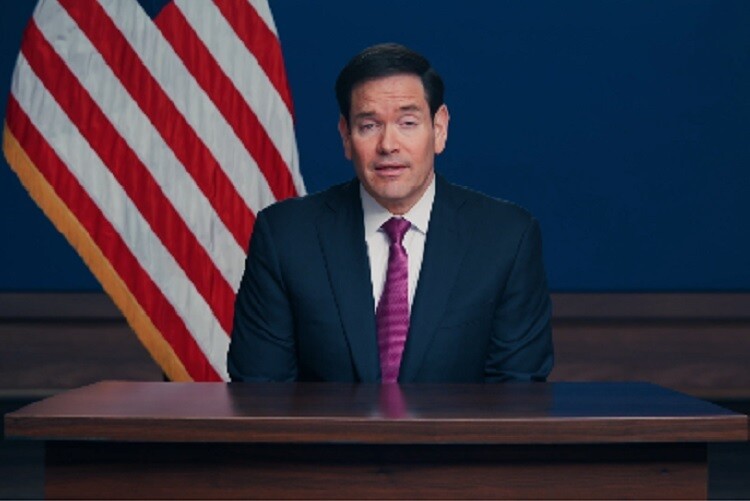
Cuba has a non-functioning economy, as well as a political and governmental system that cannot fix it, therefore, drastic changes are needed that are completely paralyzing the economy and fueling social unrest. It is a dysfunctional economy. It is an economy that has managed to survive (...) thanks to the subsidies of the Soviet Union and, later, of Venezuela, said the Cuban-American politician designated by President Donald Trump to lead the dialogue with the Caribbean country. According to Rubio, the fact that they 'no longer receive these subsidies' has caused Cuba to find itself today in a 'very complicated situation.' 'Furthermore, those in power do not know how to solve the problem, so it is necessary for new people to take on leadership,' he warned. The Trump Administration would have conditioned the departure of Díaz-Canel from power on the progress of bilateral negotiations, amid the worsening of the energy crisis the country is suffering after about three months of U.S. crude oil blockade, according to The New York Times. The proposal would imply removing the Cuban president from office, the only Cuban president without the Castro surname since the beginning of the Revolution led by the late Fidel Castro, but not necessarily modifying the structure of the current political system, according to the newspaper. Analysts agree that Díaz-Canel is just a facade, and that the real power lies with the youngest Castro, 94-year-old Raúl Castro. 'The reality is that his economy does not work. The grandson of the retired general and former secretary of the Communist Party of Cuba (the only legal one) is the island's envoy to negotiate with U.S. officials. Cuba began the week with a new nationwide blackout, the sixth in the last 18 months, amid the deep energy crisis the island has been facing since 2024, a situation that has worsened in the last three months with the U.S. oil blockade. U.S. Secretary of State Marco Rubio indicated this Tuesday that the reforms announced by Cuba amid talks with Washington do not constitute a 'drastic enough' change and assured that they will not repair a failed economy. 'Thus, they have some important decisions to make,' Rubio warned at a press conference in the Oval Office. This Monday, the government of President Miguel Díaz-Canel confirmed that it will allow its citizens abroad to invest in private companies on the island, measures that also include the participation of large investors, 'especially in infrastructure' of sectors considered priority such as tourism, mining, and energy. Asked if he would support a possible easing of the embargo that the United States has maintained on the communist island for more than 60 years - a long-standing demand of Havana - the head of U.S. diplomacy insisted that this measure 'is linked to political change on the island.' 'What they announced is not drastic enough. It is not going to solve the problem.'